Artificial Intelligence
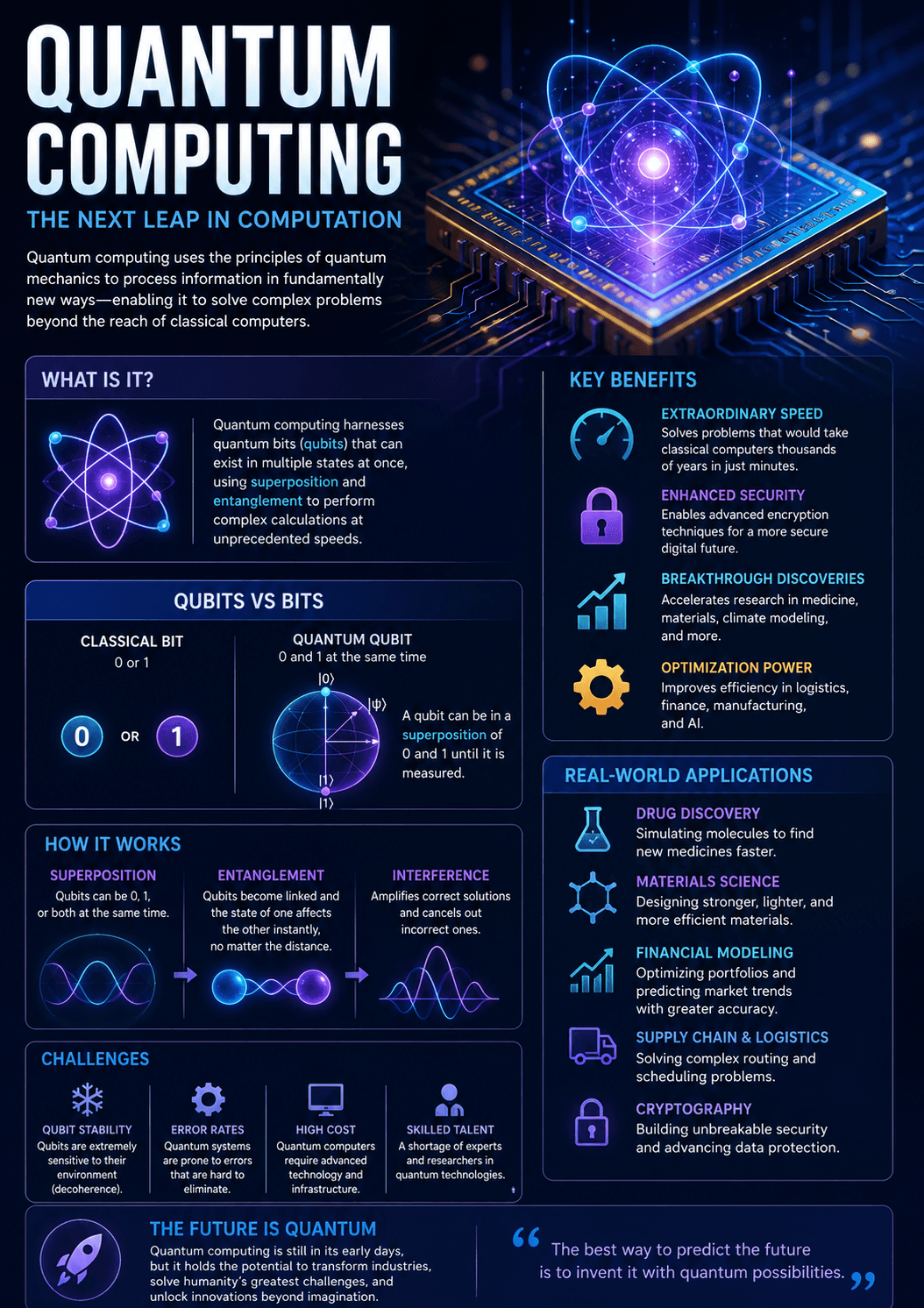
qountum computing
aslam hossain
Sponsored by . This article contains sponsored content.
Write your article here...
Cloud Computing: Transforming the Digital World
Cloud computing has become one of the most important technologies in the modern digital era. It has revolutionized the way individuals, businesses, and organizations store, manage, and process data. Instead of relying on physical computers or local servers, cloud computing allows users to access computing resources over the internet. This technology provides flexibility, scalability, and cost-effectiveness, making it an essential part of today's information technology landscape.
Cloud computing refers to the delivery of computing services such as servers, storage, databases, networking, software, analytics, and artificial intelligence through the internet, commonly known as "the cloud." Users can access these services whenever they need them without purchasing or maintaining expensive hardware. Major cloud service providers include Amazon Web Services (AWS), Microsoft Azure, Google Cloud Platform (GCP), and IBM Cloud, which offer reliable and secure cloud solutions for businesses of all sizes.
One of the greatest advantages of cloud computing is its cost efficiency. Traditional IT infrastructure requires organizations to invest heavily in hardware, software, maintenance, and technical staff. With cloud computing, businesses only pay for the resources they use, reducing upfront costs and operational expenses. This pay-as-you-go model is especially beneficial for startups and small businesses that have limited budgets but require powerful computing resources.
Another significant benefit is scalability. Cloud services allow organizations to increase or decrease their computing resources based on demand. For example, an online shopping website may experience a surge in traffic during holiday sales. Cloud computing enables the website to automatically allocate additional resources to handle increased customer activity and then reduce those resources once traffic returns to normal. This flexibility ensures optimal performance while minimizing unnecessary costs.
Cloud computing also enhances collaboration and accessibility. Employees can access files, applications, and business systems from anywhere in the world using an internet connection. This capability has become particularly important with the rise of remote work and hybrid work environments. Teams can collaborate in real time using cloud-based applications such as Google Workspace, Microsoft 365, and Dropbox, improving productivity and communication.
There are three primary service models in cloud computing. The first is Infrastructure as a Service (IaaS), which provides virtualized computing resources such as servers, storage, and networking. Users have full control over the operating systems and applications while the cloud provider manages the underlying infrastructure. The second is Platform as a Service (PaaS), which offers a development environment where programmers can build, test, and deploy applications without worrying about infrastructure management. The third is Software as a Service (SaaS), where users access software applications through a web browser without installing them on their local devices. Popular examples include Gmail, Microsoft 365, and Salesforce.
Cloud computing can also be categorized into different deployment models. A public cloud is owned and operated by third-party providers and shared among multiple customers. A private cloud is dedicated to a single organization, offering greater control and security. A hybrid cloud combines both public and private cloud environments, allowing organizations to benefit from the strengths of each model. Multi-cloud strategies, which involve using services from multiple cloud providers, are also becoming increasingly popular.
Despite its many advantages, cloud computing also presents certain challenges. Security and privacy remain major concerns because sensitive data is stored on remote servers. Organizations must implement strong encryption, access controls, and security policies to protect their information. Internet dependency is another challenge since cloud services require a stable internet connection. Additionally, businesses may face vendor lock-in, making it difficult to migrate applications and data from one cloud provider to another.
The future of cloud computing looks extremely promising. Emerging technologies such as artificial intelligence, machine learning, edge computing, and the Internet of Things (IoT) are increasingly integrated with cloud platforms. These innovations enable faster data processing, smarter decision-making, and more efficient business operations. As organizations continue their digital transformation journeys, cloud computing will remain a critical foundation for innovation and growth.
In conclusion, cloud computing has fundamentally changed how technology is delivered and consumed. It offers numerous benefits, including reduced costs, improved scalability, enhanced collaboration, and greater accessibility. Although security and connectivity challenges exist, the advantages far outweigh the disadvantages. As technology continues to evolve, cloud computing will play an even greater role in shaping the future of businesses, education, healthcare, and everyday life. Understanding cloud computing is therefore essential for anyone preparing to succeed in the modern digital world.
About the Author
Aslam Hossain is the founder and editor of Vishtech Blog, creating accessible technology content about AI, software, startups, robotics, cybersecurity, and future innovations.
Comments
Article text preview: Write your article here... Cloud Computing: Transforming the Digital World Cloud computing has become one of the most important technologies in the mo
