Space Technology
Space Manufacturing: Building Industries Beyond Earth #part3
Explore future space stations, their technologies, scientific innovations, commercial potential, challenges, and role in humanity's future beyond Earth.
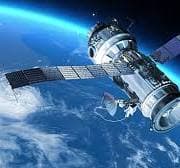
Space Manufacturing: Building Industries Beyond Earth
One of the most transformative roles of future space stations may not be exploration—it may be manufacturing.
The unique environment of microgravity allows scientists and engineers to create products that are difficult, expensive, or even impossible to produce under Earth's gravity.
Although orbital manufacturing is still in its early stages, advances in reusable launch systems, automation, and robotics are making it increasingly practical.
Why Manufacture Products in Space?
Gravity influences nearly every industrial process on Earth.
It affects:
- Crystal growth
- Metal solidification
- Fluid movement
- Chemical reactions
- Material mixing
- Heat transfer
In microgravity, many of these processes behave differently, opening opportunities for entirely new classes of products.
Some potential advantages include:
- Higher material purity
- Fewer structural defects
- Improved uniformity
- Better crystal formation
- More precise biological structures
- Reduced contamination
These benefits could justify manufacturing certain high-value products in orbit despite transportation costs.
Pharmaceutical Manufacturing
One of the most promising industries is pharmaceutical research.
Protein crystals grown in microgravity often form with fewer imperfections than those grown on Earth.
This can help researchers:
- Better understand disease mechanisms
- Design more effective drugs
- Improve vaccine development
- Study complex biological molecules
While not every medicine benefits from space-based production, microgravity research has already contributed valuable insights into drug discovery and structural biology.
Semiconductor Production
Modern electronics rely on extremely pure materials.
Tiny imperfections can reduce chip performance.
Researchers are investigating whether orbital manufacturing could produce:
- Ultra-pure semiconductor materials
- Advanced electronic components
- High-performance sensors
- Specialized quantum devices
Although commercial-scale production remains a future goal, space-based manufacturing could complement Earth-based fabrication for niche, high-value applications.
Fiber Optic Manufacturing
Certain optical fibers manufactured in microgravity may exhibit lower signal loss than those produced on Earth.
Potential applications include:
- High-speed telecommunications
- Medical imaging
- Scientific instruments
- Defense technologies
Because these fibers can command high market prices, they are often cited as one of the earliest commercially viable products for orbital manufacturing.
3D Printing in Space
Transporting every tool and spare part from Earth is impractical for long-duration missions.
Future stations are expected to use advanced additive manufacturing systems capable of producing:
- Replacement parts
- Scientific equipment
- Medical tools
- Structural components
- Custom devices
Eventually, 3D printers may utilize recycled waste or materials extracted from the Moon and asteroids, reducing dependence on Earth-based resupply.
Scientific Fact
Additive manufacturing has already been demonstrated aboard the International Space Station, proving that useful tools and replacement parts can be fabricated in orbit.
Commercial Space Stations
For decades, governments funded nearly every major space station.
That model is rapidly changing.
Private companies now view low Earth orbit as an emerging commercial marketplace.
Instead of relying entirely on government astronauts, future stations may welcome researchers, engineers, private astronauts, tourists, filmmakers, educators, and manufacturing specialists.
Why Commercial Space Stations Matter
Commercial stations aim to create sustainable business models in orbit.
Potential revenue sources include:
- Scientific research
- Industrial manufacturing
- Space tourism
- Media production
- Education
- Government contracts
- Technology demonstrations
- Satellite servicing
Diversifying revenue makes long-term operations more economically viable.
Modular Business Models
Many proposed commercial stations are designed as modular platforms.
New customers can lease:
- Laboratory space
- Manufacturing facilities
- Office modules
- Living quarters
- Data processing capabilities
This flexible approach resembles modern commercial office parks rather than traditional government research facilities.
Public–Private Partnerships
Governments are increasingly collaborating with private industry instead of building every station independently.
Such partnerships allow:
- Reduced public spending
- Faster innovation
- Shared technical expertise
- Greater commercial investment
- Expanded research opportunities
This collaborative model is expected to shape much of the next generation of orbital infrastructure.
Major Future Space Station Projects
Several ambitious projects are already under development or in advanced planning. While their designs and timelines continue to evolve, they illustrate the direction of human spaceflight.
| Project | Primary Purpose | Status |
|---|---|---|
| Axiom Station | Commercial research, tourism, manufacturing | Under phased development |
| Orbital Reef | Mixed-use commercial space station | In development |
| Starlab | Scientific research and commercial operations | In development |
| Lunar Gateway | Lunar exploration support | Under international development |
| Voyager Station (Concept) | Tourism with rotating artificial gravity | Conceptual proposal |
Important Note
Not all announced projects will necessarily be completed on their original schedules. Space programs often evolve due to technical, financial, and political factors.
Space Tourism: From Adventure to Industry
Space tourism was once considered an extravagant dream reserved for fiction.
Today, private citizens have already traveled to space through commercial missions.
Future space stations may dramatically expand these opportunities.
What Could Tourists Experience?
Depending on station design, visitors may experience:
- Earth observation
- Microgravity recreation
- Scientific demonstrations
- Educational programs
- Luxury accommodations
- Virtual reality experiences
- Space photography
- Astronomy sessions
For many travelers, simply watching Earth from orbit may become the most unforgettable experience of their lives.
Economic Potential
Space tourism could stimulate numerous industries:
- Hospitality
- Aerospace
- Insurance
- Transportation
- Education
- Entertainment
- Communications
As launch costs decrease, ticket prices may gradually become more accessible, although orbital tourism is expected to remain expensive for the foreseeable future.
Challenges
Tourism also introduces unique concerns:
- Passenger safety
- Medical screening
- Emergency evacuation
- Radiation exposure
- Psychological adaptation
- Orbital congestion
Careful regulation will be essential to balance commercial growth with safety.
Medical and Biological Research
Microgravity provides scientists with an extraordinary laboratory for studying the human body.
Many biological processes behave differently in orbit, revealing mechanisms that remain hidden under Earth's gravity.
Human Health Research
Long-duration missions help scientists understand:
- Bone loss
- Muscle deterioration
- Cardiovascular adaptation
- Immune system changes
- Vision changes
- Sleep cycles
- Cognitive performance
These studies improve astronaut health while also contributing to healthcare on Earth.
Tissue Engineering
Researchers are investigating whether microgravity allows more complex biological tissues to grow.
Potential future applications include:
- Artificial organs
- Advanced skin grafts
- Cartilage repair
- Disease modeling
Although many challenges remain, orbital laboratories provide valuable experimental environments.
Cancer Research
Microgravity can alter how cancer cells grow and interact.
Scientists are exploring whether these differences can reveal:
- New drug targets
- Better treatment strategies
- Improved understanding of tumor development
Research remains ongoing, and findings continue to be carefully evaluated.
Industries That Will Benefit
Future space stations are unlikely to serve only astronauts.
Instead, they may support a wide range of industries.
Aerospace
Applications include:
- Spacecraft assembly
- Satellite servicing
- Orbital refueling
- Navigation technologies
Medicine
Benefits may include:
- Drug discovery
- Medical device development
- Biomedical research
- Human physiology studies
Manufacturing
Potential products include:
- Advanced alloys
- Optical fibers
- Electronic materials
- Precision components
Education
Schools and universities may participate through:
- Remote experiments
- Student-designed payloads
- Virtual classrooms
- International collaborations
Entertainment
Emerging possibilities include:
- Movies filmed in space
- Live broadcasts
- Sports demonstrations in microgravity
- Immersive educational content
Lunar Gateway: The Bridge to Deep Space
Unlike stations orbiting Earth, the Lunar Gateway is planned to orbit the Moon.
Its purpose differs significantly from the ISS.
Rather than supporting continuous large crews, it is intended to function as a logistics hub for lunar exploration.
Why Orbit the Moon?
A lunar station can support:
- Artemis missions
- Surface exploration
- Scientific research
- Cargo staging
- Deep-space technology testing
It also provides experience operating farther from Earth than previous long-duration human missions.
Preparing for Mars
Engineers view lunar missions as stepping stones toward Mars.
Future lunar stations can help validate:
- Life-support systems
- Radiation protection
- Autonomous operations
- Surface logistics
- Habitat technologies
Lessons learned around the Moon will inform future interplanetary missions.
Case Studies
Case Study 1: The International Space Station
The ISS has demonstrated:
- Continuous human habitation
- International cooperation
- Advanced robotics
- Long-duration medical research
- Technology demonstrations
Many future station technologies build directly upon ISS experience.
Case Study 2: Commercial Cargo Programs
Government partnerships with commercial launch providers transformed cargo transportation.
Instead of owning every launch system, agencies increasingly purchase transportation as a service.
This approach has:
- Increased competition
- Encouraged innovation
- Reduced costs
- Expanded launch frequency
Similar commercial models may shape future orbital infrastructure.
Case Study 3: Robotic Maintenance
Robotic arms aboard existing space stations have successfully assisted with:
- Capturing spacecraft
- Moving equipment
- Supporting maintenance
- Scientific operations
Future robotic systems are expected to become increasingly autonomous, reducing astronaut workload and improving safety.
Current Developments and Emerging Trends
Several trends are shaping the next generation of space stations:
Reusable Launch Vehicles
Lower launch costs are making orbital construction more economically feasible.
Artificial Intelligence
AI is expected to automate maintenance, resource management, and scientific operations.
In-Space Manufacturing
Manufacturing high-value products in microgravity is attracting growing investment.
Autonomous Robotics
Robots will increasingly perform inspections, repairs, and construction.
International Collaboration
Future stations are likely to involve partnerships among governments, universities, and private companies.
Quote Box
"The future of space stations is not defined by a single destination, but by the creation of an interconnected orbital infrastructure that enables science, commerce, and exploration beyond Earth."
About the Author
Aslam Hossain is the founder and editor of Vishtech Blog, creating accessible technology content about AI, software, startups, robotics, cybersecurity, and future innovations.
Comments
Article text preview: Space Manufacturing: Building Industries Beyond Earth One of the most transformative roles of future space stations may not be exploration—it may be m