Biomedical Engineering
How Memory and Learning Work: The Science Behind the Human Brain #part3
Learn how the human brain forms, stores, strengthens, and retrieves memories. Explore neuroplasticity, learning, sleep, and memory science in this comprehensive biology guide.
Sponsored by . This article contains sponsored content.
Premium article: membership access controls are enabled for this content architecture.
Write your article here...
Neuroplasticity: How Learning Physically Changes the Brain
Have you ever wondered why learning a new language feels difficult at first but becomes easier with practice? Or why an experienced pianist can play a complex piece without consciously thinking about every note?
The answer lies in one of the most extraordinary discoveries in modern neuroscience: neuroplasticity.
For many years, scientists believed that the adult brain was largely fixed—that once brain development was complete, its structure remained unchanged for the rest of life. According to this old view, damaged brain cells could never recover, and learning simply meant filling the brain with more information.
Today, we know this belief was incorrect.
Modern research has revealed that the brain is a dynamic organ capable of changing throughout life. Every new experience, every skill you practice, and every challenge you overcome can alter the brain's physical structure. This remarkable ability to reorganize itself is known as neuroplasticity, and it is the biological foundation of learning, adaptation, and recovery.
Figure 17. Neuroplasticity allows the brain to reorganize its neural networks throughout life. Learning strengthens existing connections, creates new pathways, and improves communication between neurons.
What Is Neuroplasticity?
Neuroplasticity refers to the brain's ability to modify its structure and function in response to experience.
Every time you learn something new, billions of neurons communicate through tiny junctions called synapses. Repeated communication strengthens these synaptic connections, making future communication faster, more efficient, and more reliable.
Imagine walking through a dense forest for the first time. There is no clear trail, so moving forward is slow and difficult. However, if you walk the same path every day, the vegetation gradually disappears, creating a smooth and recognizable trail.
The brain works in a remarkably similar way.
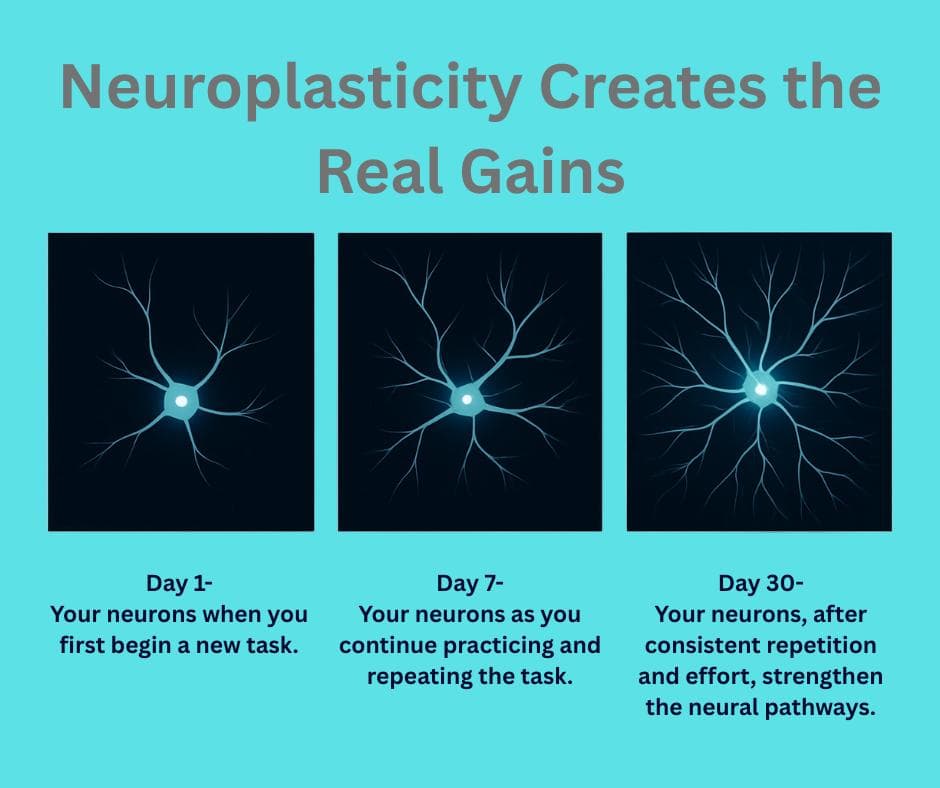
The first time you perform a new task, neural communication is relatively weak and inefficient. With repetition, those pathways become increasingly organized and efficient, allowing the skill to become faster and more automatic.
This is why beginners struggle while experts perform seemingly effortless actions.
Figure 18. Repeated practice strengthens neural pathways much like repeatedly walking the same trail creates a clear path through a forest. Efficient neural communication is a hallmark of long-term learning.
Practice Literally Reshapes the Brain
Learning is not simply about remembering facts—it produces measurable biological changes.
When a student studies mathematics, neurons involved in reasoning and problem-solving become more strongly connected. A musician repeatedly practicing scales strengthens circuits controlling hearing, movement, and coordination. An athlete develops more efficient communication between brain regions responsible for balance, timing, and muscle control.
Over weeks, months, and years, these microscopic changes accumulate into lasting improvements in performance.
Brain imaging studies have shown that individuals who practice demanding skills for long periods often develop measurable differences in the organization and activity of specific brain regions. Although every person's brain is unique, the principle remains consistent: practice changes the brain.
These changes help explain why expertise cannot be achieved through passive observation alone. Reading about swimming does not teach your brain to swim. True mastery requires repeated experience that continually reinforces the underlying neural networks.
Figure 19. Continuous practice strengthens specialized neural networks. As these circuits become more efficient, complex skills require less conscious effort and can be performed with greater accuracy.
Neuroplasticity Throughout Life
Although children's brains are especially adaptable, neuroplasticity does not disappear in adulthood.
Adults continue to form new memories, acquire languages, develop careers, learn musical instruments, and recover from many injuries because their brains remain capable of reorganizing neural connections.
For example, after certain types of brain injury, healthy regions may partially compensate for damaged areas through intensive rehabilitation. While recovery varies depending on the severity of the injury, this demonstrates that the brain possesses a remarkable capacity for adaptation.
Similarly, learning a new hobby later in life—such as painting, photography, programming, or chess—stimulates new patterns of neural activity and encourages the formation of additional synaptic connections.
Rather than being fixed, the adult brain remains a living system that continuously responds to experience.
Figure 20. Neuroplasticity continues throughout adulthood. Learning new skills, engaging in challenging activities, and participating in rehabilitation programs encourage the brain to strengthen existing pathways and establish new neural connections.
What Strengthens Neuroplasticity?
Scientists have identified several everyday habits that support healthy brain plasticity and improve learning efficiency.
Among the most effective are:
- Regular physical exercise, which increases blood flow and supports brain health.
- Consistent, high-quality sleep, allowing memories to consolidate and neural circuits to strengthen.
- Continuous learning through reading, problem-solving, and acquiring new skills.
- Active recall and spaced repetition, which repeatedly reactivate memory pathways.
- Social interaction and meaningful conversations that stimulate multiple cognitive systems.
- A balanced diet rich in nutrients that support normal brain function.
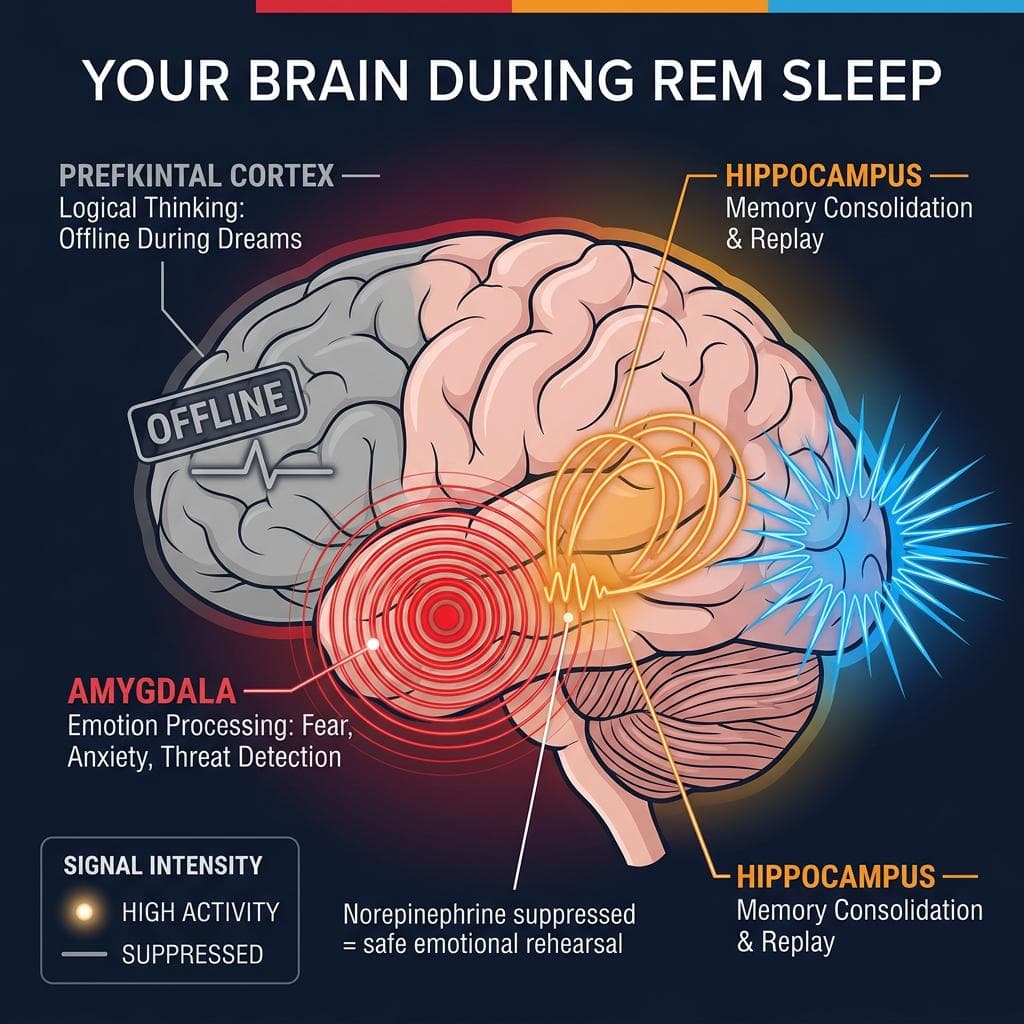
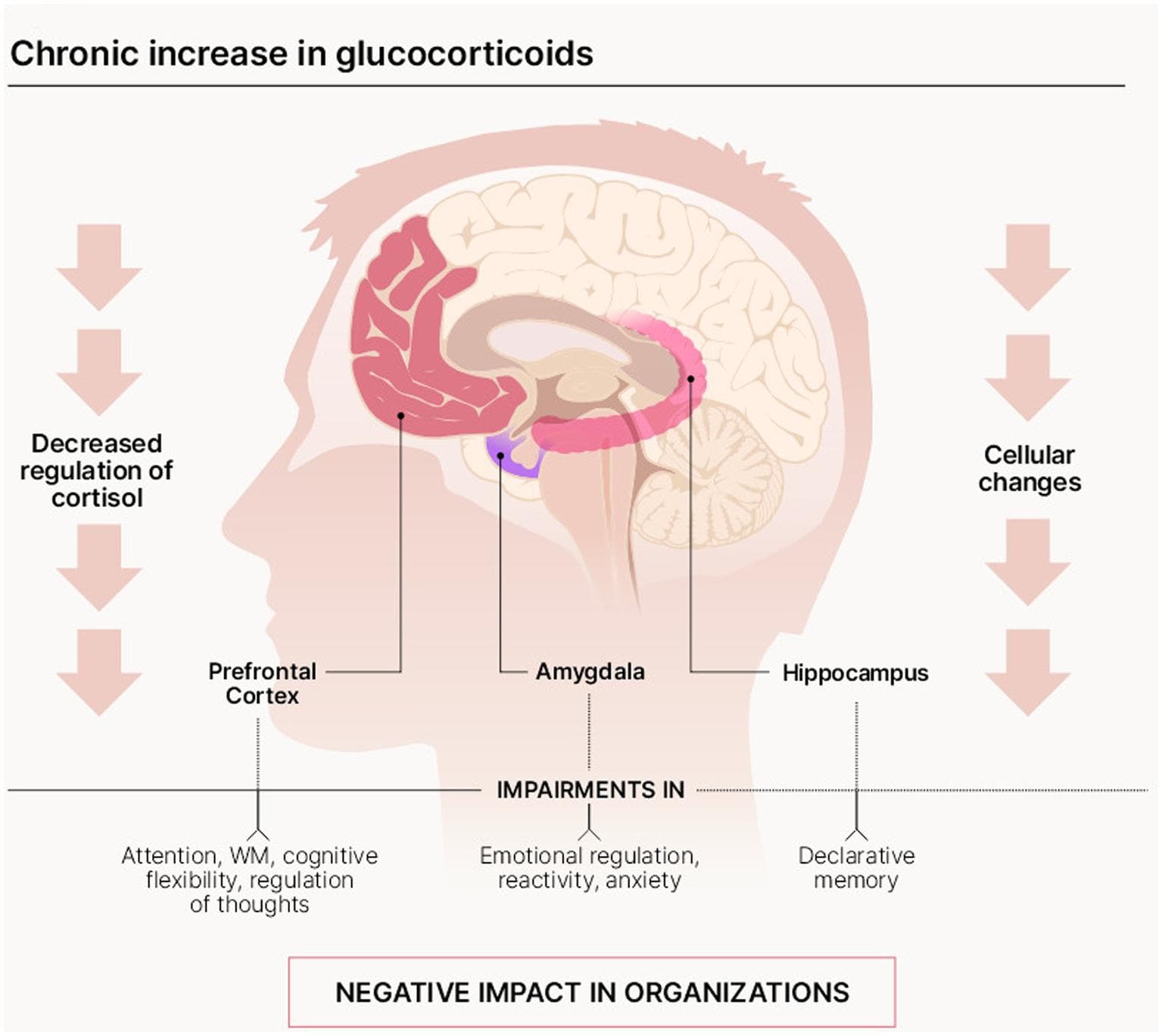
- Effective stress management, since prolonged stress may interfere with learning and memory.
These habits do not instantly increase intelligence, but they create an environment in which the brain can adapt more effectively and build stronger neural networks over time.
Neuroplasticity reminds us that learning is never truly finished. Every new experience has the potential to reshape the brain, strengthen existing knowledge, and expand our ability to understand the world.
In the next section, we will explore how sleep transforms fragile new memories into stable long-term knowledge, revealing why a good night's sleep is one of the most powerful tools for improving learning and protecting brain health.
About the Author
Aslam Hossain is the founder and editor of Vishtech Blog, creating accessible technology content about AI, software, startups, robotics, cybersecurity, and future innovations.
Comments
Article text preview: Write your article here... Neuroplasticity: How Learning Physically Changes the Brain Have you ever wondered why learning a new language feels difficu