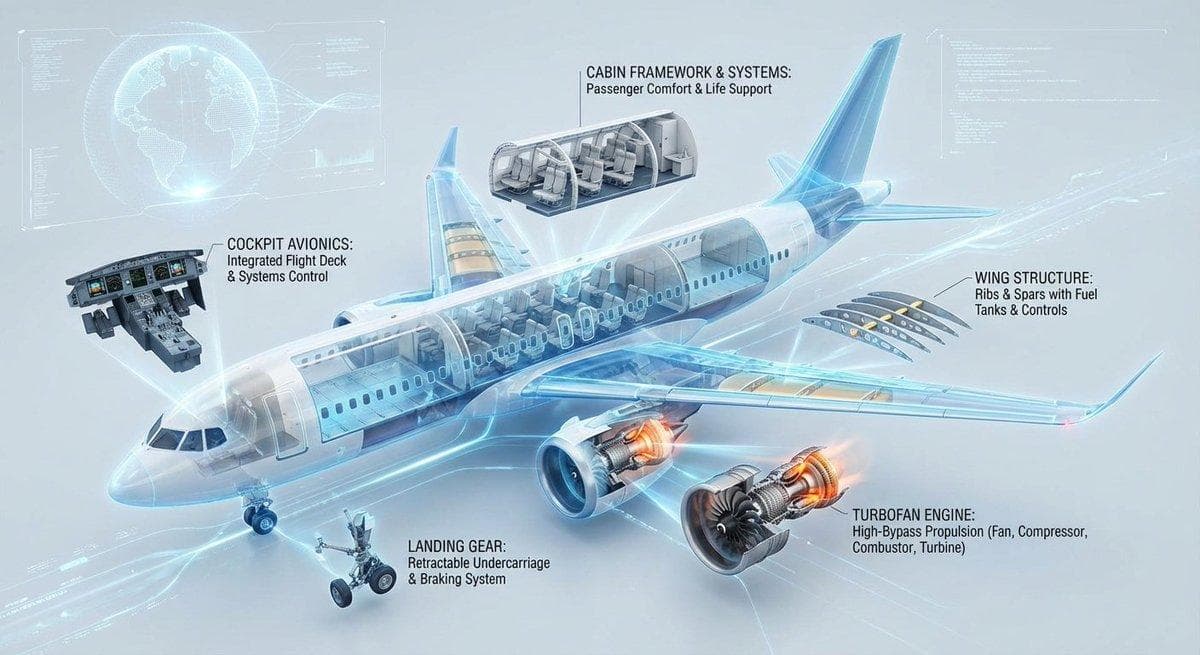
Engineering
eronautical Engineering Careers, Salary & Future Guide #part3
Explore Aeronautical Engineering careers, top universities, essential skills, salary insights, emerging aviation technologies, AI, sustainable aircraft, and the future of flight.
Aeronautical Engineering: The Science Behind Aircraft Design, Flight, and Aviation
Part 3 — Careers, Top Universities, Future Technologies, and the Future of Flight
Introduction
Every aircraft you see in the sky represents far more than engineering calculations and advanced technology.
Behind every commercial airliner, fighter jet, rescue helicopter, cargo aircraft, and unmanned drone is a team of engineers solving problems that directly affect millions of people's lives.
Some engineers spend years designing lighter aircraft structures.
Others develop quieter and more efficient jet engines.
Some create autonomous flight software powered by artificial intelligence.
Others test entirely new aircraft that may shape the future of transportation.
Aeronautical Engineering is much more than learning how airplanes fly. It is a career built on innovation, creativity, teamwork, and a passion for solving complex challenges.
In this final chapter of our series, we'll explore the career opportunities available in aeronautical engineering, the world's leading universities, the skills employers value most, salary expectations, and the exciting technologies that are transforming aviation over the coming decades.
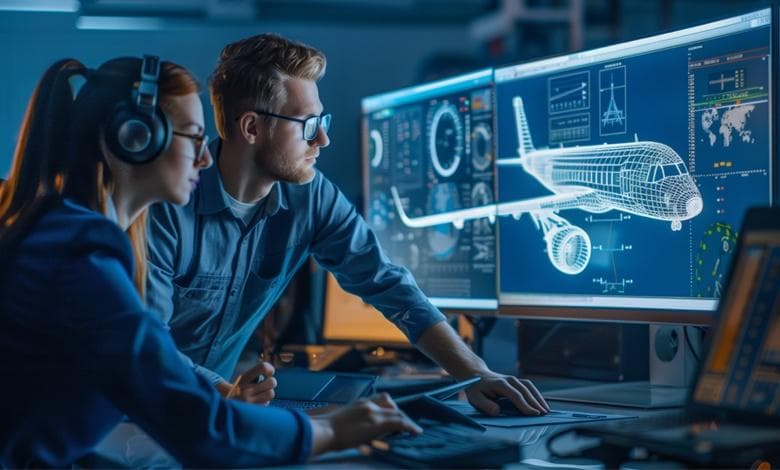
Figure 1. Aeronautical engineers collaborate across multiple disciplines to design, test, and improve the next generation of aircraft.
Caption: Modern aviation depends on engineers specializing in aerodynamics, propulsion, structures, avionics, software, and manufacturing.
SEO Alt Text: Aeronautical engineers designing future aircraft using advanced engineering technology.
Career Opportunities in Aeronautical Engineering
One of the greatest strengths of Aeronautical Engineering is its diversity.
Graduates are not limited to designing airplanes. The skills developed during an aeronautical engineering degree are valuable across aviation, defense, manufacturing, research, robotics, and emerging technology industries.
Some of the most common career paths include:
Aircraft Design Engineer
These engineers design aircraft from the earliest concept sketches to full-scale production models.
Their responsibilities include:
- Wing design
- Structural optimization
- Fuel efficiency improvements
- Computer simulations
- CAD modeling
- Prototype development
Aerodynamics Engineer
Aerodynamics engineers study airflow around aircraft.
Using Computational Fluid Dynamics (CFD) software and wind tunnel experiments, they work to:
- Reduce drag
- Increase lift
- Improve fuel efficiency
- Reduce aircraft noise
- Enhance flight stability
Propulsion Engineer
Propulsion engineers design and improve aircraft engines.
They work on:
- Turbofan engines
- Turboprops
- Hybrid propulsion
- Hydrogen-powered engines
- Sustainable Aviation Fuel (SAF)
- Electric propulsion systems
Flight Test Engineer
Before a new aircraft enters service, it must undergo extensive testing.
Flight test engineers:
- Plan test flights
- Analyze flight data
- Verify aircraft performance
- Investigate unusual behavior
- Ensure certification requirements are met
Avionics Engineer
Modern aircraft rely heavily on sophisticated electronics.
Avionics engineers develop systems such as:
- Navigation
- Flight computers
- Radar
- Communication
- Autopilot
- Digital cockpit displays
Maintenance and Safety Engineer
Not every aeronautical engineer designs new aircraft.
Many ensure existing fleets remain safe throughout decades of operation.
Their responsibilities include:
- Structural inspections
- Failure analysis
- Maintenance planning
- Safety audits
- Aircraft certification
Industries That Hire Aeronautical Engineers
Aeronautical engineers work across a wide range of industries.
Common employers include:
| Industry | Examples |
|---|---|
| Commercial Aviation | Airlines, aircraft manufacturers |
| Defense | Military aviation programs |
| Government | Aviation authorities and research laboratories |
| Space Organizations | Launch vehicle and aircraft research |
| UAV Industry | Drones and autonomous aircraft |
| Manufacturing | Aircraft components and systems |
| Research | Universities and aerospace laboratories |
| Consulting | Aviation engineering firms |
The demand for engineers continues to grow as air travel, autonomous systems, and sustainable aviation technologies expand worldwide.
Figure 2. Aeronautical engineers work in manufacturing, research, testing, maintenance, and advanced technology development.
Caption: Career opportunities extend far beyond designing commercial airplanes.
SEO Alt Text: Aerospace engineers working in aircraft manufacturing, testing, and research facilities.
Skills Every Aeronautical Engineer Should Develop
Success in aeronautical engineering depends on much more than academic knowledge.
Employers value engineers who combine technical expertise with strong problem-solving abilities.
Technical Skills
- Mathematics
- Physics
- Fluid Mechanics
- Thermodynamics
- Aerodynamics
- Aircraft Structures
- Propulsion
- Flight Mechanics
- Materials Science
- CAD Modeling
- CFD Simulation
- Finite Element Analysis (FEA)
- MATLAB
- Python Programming
- C++
- Data Analysis
Soft Skills
- Communication
- Teamwork
- Leadership
- Critical Thinking
- Creativity
- Project Management
- Time Management
- Technical Writing
- Presentation Skills
The most successful engineers continue learning throughout their careers as aviation technology evolves.
Best Universities for Aeronautical Engineering
Several universities have earned international recognition for aerospace research and engineering education.
Among the most respected are:
| University | Country |
|---|---|
| Massachusetts Institute of Technology (MIT) | United States |
| Stanford University | United States |
| Georgia Institute of Technology | United States |
| Delft University of Technology | Netherlands |
| University of Cambridge | United Kingdom |
| Imperial College London | United Kingdom |
| Purdue University | United States |
| University of Michigan | United States |
| Cranfield University | United Kingdom |
| National University of Singapore | Singapore |
These institutions collaborate closely with aviation companies and research organizations, providing students with opportunities to participate in cutting-edge aerospace projects.
Salary Expectations
Salaries vary depending on:
- Country
- Experience
- Industry
- Education
- Certifications
- Employer
In general:
- Entry-level engineers build experience through design and analysis roles.
- Mid-career professionals often specialize in areas such as aerodynamics, propulsion, or avionics.
- Senior engineers, technical leads, and engineering managers typically earn significantly higher salaries due to their expertise and leadership responsibilities.
Beyond salary, many positions offer opportunities to contribute to technologies that shape global transportation and safety.
Emerging Technologies Transforming Aviation
The aviation industry is undergoing one of the biggest technological transformations in its history.
Sustainable Aviation Fuel (SAF)
Traditional jet fuel contributes to greenhouse gas emissions.
SAF is produced from renewable resources and can significantly reduce lifecycle carbon emissions while remaining compatible with many existing aircraft.
Electric Aircraft
Several companies are developing aircraft powered entirely or partially by electric propulsion.
Although current battery technology limits range, electric aircraft are becoming increasingly practical for:
- Pilot training
- Regional transportation
- Urban air mobility
Hydrogen-Powered Aircraft
Hydrogen has the potential to reduce carbon emissions dramatically.
Engineers are investigating new aircraft architectures capable of storing and using hydrogen safely and efficiently.
Artificial Intelligence
Artificial intelligence is already improving aviation through:
- Predictive maintenance
- Flight optimization
- Air traffic management
- Autonomous navigation
- Manufacturing quality control
- Fuel efficiency analysis
AI assists engineers by analyzing vast amounts of operational data, enabling faster and more informed decisions.
Advanced Composite Materials
Future aircraft will rely even more heavily on lightweight composite structures that improve strength while reducing fuel consumption.
Researchers are also exploring self-healing materials capable of repairing microscopic damage before it becomes a safety concern.
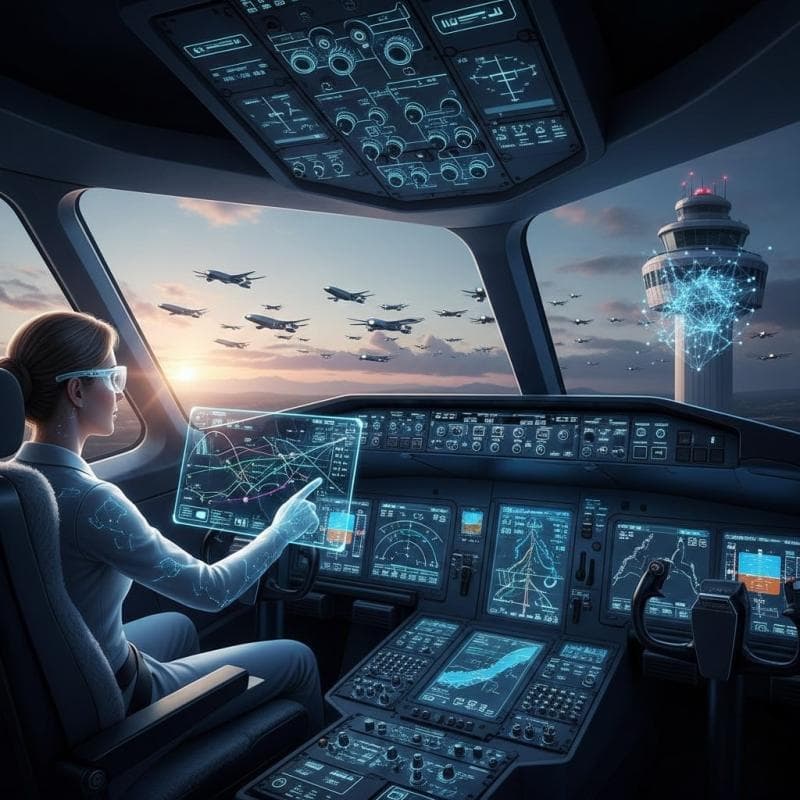
Figure 3. Electric propulsion, hydrogen fuel, artificial intelligence, and advanced materials are reshaping the future of aviation.
Caption: Future aircraft will focus on sustainability, automation, and greater operational efficiency.
SEO Alt Text: Concept illustrations of electric aircraft, hydrogen-powered airplanes, and AI-driven aviation technologies.
The Future of Flight
The next few decades promise remarkable changes.
Engineers are working toward:
- Carbon-neutral aviation
- Autonomous cargo aircraft
- Urban air taxis
- Hypersonic passenger transportation
- Smart airports
- AI-assisted flight operations
- Digital twin aircraft
- Fully connected aircraft systems
Many of these technologies are already moving from research laboratories into real-world testing.
The engineers entering the profession today will help transform these ideas into everyday reality.
Why Choose Aeronautical Engineering?
Aeronautical Engineering is ideal for students who enjoy:
- Mathematics
- Physics
- Problem-solving
- Technology
- Innovation
- Aircraft
- Design
- Engineering challenges
It combines scientific theory with practical application, allowing engineers to build technologies that improve transportation, safety, and global connectivity.
Few professions offer the opportunity to see your work literally take flight.
Career Insight
The future of aeronautical engineering is no longer defined solely by faster airplanes. Today's engineers are equally focused on cleaner energy, smarter automation, safer operations, and sustainable aviation that benefits both society and the environment.
Key Takeaways
- Aeronautical Engineering offers careers in aircraft design, aerodynamics, propulsion, avionics, manufacturing, maintenance, and research.
- Strong foundations in mathematics, physics, programming, and engineering software are essential.
- Leading universities provide opportunities to participate in cutting-edge aerospace research.
- Emerging technologies such as electric aircraft, hydrogen propulsion, AI, and advanced composites are transforming aviation.
- Lifelong learning and continuous innovation are central to success in this rapidly evolving field.
Conclusion
Aeronautical Engineering is the science of turning humanity's dream of flight into reality.
From the earliest wooden aircraft to today's fuel-efficient airliners and tomorrow's electric and hydrogen-powered airplanes, the field has continually pushed the boundaries of what is possible.
As global aviation faces new challenges—including sustainability, automation, and growing demand for air travel—the role of aeronautical engineers has never been more important.
Whether you're inspired by designing advanced aircraft, improving aviation safety, developing cleaner propulsion systems, or exploring the future of autonomous flight, Aeronautical Engineering offers a career where curiosity, creativity, and engineering come together to shape the skies of tomorrow.Write your article here...
About the Author
Aslam Hossain is the founder and editor of Vishtech Blog, creating accessible technology content about AI, software, startups, robotics, cybersecurity, and future innovations.
Comments
Article text preview: Aeronautical Engineering: The Science Behind Aircraft Design, Flight, and Aviation Part 3 — Careers, Top Universities, Future Technologies, and the Fu