Space Technology
Advantages of Future Space Stations #part5
Explore future space stations, their technologies, scientific innovations, commercial potential, challenges, and role in humanity's future beyond Earth.
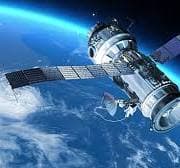
Advantages of Future Space Stations
Future space stations promise to extend humanity's capabilities in science, industry, and exploration. While they require enormous investment, their potential benefits reach far beyond space itself.
Scientific Advancement
Future orbital laboratories will enable experiments that cannot be performed under Earth's gravity.
Potential scientific benefits include:
- Improved understanding of human biology
- New pharmaceutical discoveries
- Advanced materials research
- Fundamental physics experiments
- Space agriculture research
- Climate and Earth observation
Economic Growth
A mature orbital economy could create entirely new industries.
Examples include:
- Space manufacturing
- Orbital logistics
- Commercial research
- Space tourism
- Satellite servicing
- Artificial intelligence applications
- Robotics development
Technological Innovation
Many technologies originally developed for space missions later became valuable on Earth.
Future stations may accelerate innovation in:
- Water purification
- Renewable energy
- Recycling systems
- Robotics
- Telecommunications
- Artificial intelligence
- Medical technology
Preparing for Deep-Space Exploration
Future stations can act as stepping stones for missions beyond Earth orbit.
They may support:
- Lunar exploration
- Mars missions
- Deep-space telescopes
- Asteroid exploration
- Long-duration habitat testing
Disadvantages and Limitations
Despite their promise, future space stations face important limitations.
High Development Costs
Designing, launching, assembling, and maintaining orbital infrastructure requires billions of dollars.
Costs include:
- Research and development
- Launch services
- Crew training
- Maintenance
- Mission operations
- Safety systems
Human Health Risks
Long-term exposure to space still presents serious medical concerns.
These include:
- Radiation exposure
- Bone loss
- Muscle atrophy
- Vision changes
- Psychological stress
Although countermeasures continue to improve, no complete solution currently exists.
Technical Complexity
Future stations will depend on thousands of interconnected systems.
Failures affecting:
- Power
- Communications
- Life support
- Computing
- Navigation
could have serious consequences.
Environmental Concerns
Increasing activity in orbit raises concerns about:
- Space debris
- Launch emissions
- Orbital congestion
- Sustainable operations
Responsible mission planning is essential.
Pros and Cons Table
| Pros | Cons |
|---|---|
| Enables groundbreaking scientific research | Extremely expensive |
| Supports Moon and Mars missions | Radiation remains a major challenge |
| Encourages international cooperation | Complex engineering requirements |
| Drives technological innovation | Risk from orbital debris |
| Creates new commercial industries | Long-term health effects of microgravity |
| Advances medical research | Cybersecurity challenges |
| Promotes reusable space infrastructure | Limited emergency rescue options |
| Expands educational opportunities | Requires long-term political and financial commitment |
Comparison: International Space Station vs. Future Space Stations
| Feature | International Space Station | Future Space Stations |
|---|---|---|
| Primary Purpose | Scientific research | Multi-purpose research, commerce, tourism, manufacturing |
| Ownership | Government partnership | Government and commercial partnerships |
| Artificial Intelligence | Limited automation | Extensive AI-assisted operations |
| Robotics | Advanced robotic arms | Autonomous robotic ecosystems |
| Manufacturing | Experimental | Industrial-scale specialized manufacturing |
| Tourism | Limited | Expected commercial operations |
| Artificial Gravity | No | Under active research for future designs |
| Sustainability | Partial recycling | Advanced closed-loop ecosystems |
| Expansion | Limited | Highly modular architecture |
| Mission Support | Low Earth Orbit research | Earth orbit, Moon, and deep-space logistics |
Timeline: The Evolution of Space Stations
| Year / Era | Milestone |
|---|---|
| 1971 | First space station launched (Salyut 1) |
| 1970s–1980s | Early experimental orbital stations demonstrate long-duration human spaceflight |
| 1986 | Mir begins modular space station operations |
| 1998 | Assembly of the International Space Station (ISS) begins |
| 2000 | Continuous human occupation of the ISS starts |
| 2020s | Commercial space station development accelerates |
| 2030s (Expected) | First commercial next-generation stations become operational (prediction based on current plans) |
| 2040s (Possible) | Larger orbital manufacturing facilities and expanded lunar support infrastructure (expert prediction) |
| Beyond 2050 (Speculative) | Large rotating habitats and interconnected orbital settlements (speculative concept) |
Important Note
Dates beyond the present are projections based on current development programs and expert expectations. They are subject to change due to technical, economic, or political factors.
Common Myths About Future Space Stations
Myth 1: There is no gravity in space.
Reality: Gravity is still present in orbit. Astronauts experience microgravity because they and the station are continuously falling around Earth.
Myth 2: Future space stations will replace Earth.
Reality: Space stations are expected to complement life on Earth by supporting research, industry, and exploration—not replace our planet.
Myth 3: Space tourism will soon become affordable for everyone.
Reality: Costs are expected to decrease over time, but orbital tourism will likely remain expensive for many years.
Myth 4: Artificial gravity already exists.
Reality: Artificial gravity through rotation is scientifically well understood, but no large rotating human habitat has yet been built and operated in space.
Myth 5: Space stations are only useful for astronauts.
Reality: Future stations may benefit scientists, engineers, educators, medical researchers, manufacturers, and even people on Earth through technological innovation.
Best Practices for Developing Future Space Stations
To maximize scientific, economic, and societal value, future space stations should prioritize:
- Modular and upgradeable designs
- Sustainable closed-loop life-support systems
- Strong international collaboration
- Cybersecurity by design
- Responsible debris mitigation
- Transparent scientific research
- Ethical governance
- Commercial accessibility balanced with public interest
- Continuous astronaut health monitoring
- AI systems with human oversight
Key Takeaways
Summary Box
- Future space stations will evolve from research laboratories into multifunctional orbital infrastructure.
- Advances in AI, robotics, life-support systems, and reusable launch technology are making long-duration space habitation increasingly practical.
- These stations could support manufacturing, tourism, medicine, education, and deep-space exploration.
- Significant challenges remain, including radiation protection, space debris, cost, cybersecurity, and human health.
- The long-term vision of permanent human communities in space remains an active area of research and engineering, with many concepts still speculative.
People Also Ask (PAA)
What is a future space station?
A future space station is an advanced orbital habitat designed to support scientific research, commercial activities, manufacturing, tourism, and deep-space exploration using next-generation technologies.
Will future space stations have artificial gravity?
Artificial gravity is a major area of research. Rotating habitats could simulate gravity, but no full-scale operational station currently uses this technology.
Why are commercial space stations being developed?
Commercial stations aim to support research, manufacturing, tourism, and other private-sector activities while complementing government space programs.
How will astronauts obtain food on future stations?
Food will likely come from a combination of cargo deliveries, improved preservation methods, and onboard cultivation of selected crops in controlled environments.
Can future space stations help missions to Mars?
Yes. They may serve as assembly points, research facilities, and logistics hubs for long-duration missions beyond Earth orbit.
Frequently Asked Questions (FAQ)
1. What is the main purpose of future space stations?
Their primary goal is to support long-term human activities in space, including research, commerce, manufacturing, and exploration.
2. Will people live permanently on future space stations?
Long-duration habitation is expected, but large permanent civilian populations remain a future possibility rather than an established reality.
3. Who is building future space stations?
Development involves national space agencies, private aerospace companies, research institutions, and international partnerships.
4. What technologies are most important?
Key technologies include:
- Artificial intelligence
- Robotics
- Closed-loop life support
- Advanced solar power
- Reusable spacecraft
- Autonomous maintenance
- Advanced materials
5. What is the biggest challenge?
Protecting astronauts from long-term radiation exposure remains one of the most significant engineering and medical challenges.
6. Could future stations manufacture products?
Yes. Microgravity enables specialized manufacturing processes for certain high-value products such as pharmaceuticals, optical fibers, and advanced materials.
7. Are future space stations environmentally sustainable?
They are being designed with recycling, reusable launch systems, and debris mitigation in mind, although environmental impacts must continue to be managed carefully.
8. Will future stations lead to space colonization?
They are widely viewed as important stepping stones toward sustained human exploration of the Moon, Mars, and potentially other destinations. However, permanent space settlements remain a long-term objective rather than a near-term certainty.
FAQ Schema Content (JSON-LD)
{
  "@context": "https://schema.org",
  "@type": "FAQPage",
  "mainEntity": [
    {
      "@type": "Question",
      "name": "What is a future space station?",
      "acceptedAnswer": {
        "@type": "Answer",
        "text": "A future space station is an advanced orbital habitat designed for scientific research, commercial activities, manufacturing, tourism, and deep-space exploration."
      }
    },
    {
      "@type": "Question",
      "name": "Will future space stations have artificial gravity?",
      "acceptedAnswer": {
        "@type": "Answer",
        "text": "Artificial gravity is under active research, most commonly through rotating habitat concepts, but no operational large-scale system currently exists."
      }
    },
    {
      "@type": "Question",
      "name": "Why are commercial space stations important?",
      "acceptedAnswer": {
        "@type": "Answer",
        "text": "Commercial space stations can support research, manufacturing, tourism, and private-sector innovation while complementing government-led missions."
      }
    }
  ]
}
Image Placement Suggestions
| Section | Suggested Image |
|---|---|
| Introduction | Concept art of a next-generation space station orbiting Earth |
| History | Timeline of major space stations |
| How It Works | Cutaway diagram showing station modules |
| AI & Robotics | Autonomous maintenance robots in orbit |
| Life Support | Closed-loop ecosystem illustration |
| Artificial Gravity | Rotating habitat concept |
| Manufacturing | Orbital 3D printing and production facility |
| Lunar Gateway | Illustration of Gateway orbiting the Moon |
| Future Predictions | Artist's impression of interconnected orbital infrastructure |
Infographic Suggestions
- Evolution of Space Stations (1971–Future)
- Anatomy of a Future Space Station
- Closed-Loop Life Support Cycle
- Artificial Gravity Explained
- AI and Robotics in Orbit
- Space Economy Ecosystem
- Timeline to Moon and Mars Infrastructure
- Challenges vs. Solutions in Orbital Habitats
Suggested Internal Links
If this article is published on VISTECHX, consider linking internally to related topics such as:
- Quantum Computing
- Artificial Intelligence
- Robotics
- Space Exploration
- Space Tourism
- Reusable Rockets
- Satellite Technology
- Cybersecurity
- Renewable Energy
- Future Cities
- Nanotechnology
- Biotechnology
- The Future of Mars Exploration
- Sustainable Technologies
Suggested External References
For readers seeking authoritative information, link to reputable organizations such as:
- NASA
- European Space Agency (ESA)
- Japan Aerospace Exploration Agency (JAXA)
- Canadian Space Agency (CSA)
- United Nations Office for Outer Space Affairs (UNOOSA)
- National Academies of Sciences, Engineering, and Medicine
- Peer-reviewed journals such as Nature, Science, and Acta Astronautica
Final Conclusion
Future space stations represent far more than the next generation of orbital laboratories—they are the foundation of humanity's expanding presence beyond Earth. Built upon decades of experience gained from missions like Mir and the International Space Station, these advanced habitats are expected to integrate artificial intelligence, autonomous robotics, sustainable life-support systems, and commercial innovation into a unified platform for exploration and discovery.
Their potential extends well beyond scientific research. Future stations could become centers for advanced manufacturing, pharmaceutical development, education, tourism, and deep-space logistics, supporting missions to the Moon, Mars, and eventually farther into the Solar System. At the same time, significant challenges remain. Radiation exposure, orbital debris, long-term human health, cybersecurity, environmental sustainability, and international governance require continued research and careful collaboration.
It is also important to distinguish between what is already known and what remains uncertain. Established scientific evidence confirms that humans can live and work in space for extended periods and that microgravity offers unique opportunities for research. Current research is advancing technologies such as artificial gravity, autonomous robotics, and closed-loop ecosystems. Expert predictions suggest that commercial stations and orbital industries will become increasingly common in the coming decades. Speculative visions, including large rotating orbital cities and permanent civilian settlements, remain inspiring possibilities rather than demonstrated realities.
Ultimately, the success of future space stations will depend not only on engineering breakthroughs but also on responsible international cooperation, ethical decision-making, and sustainable development. If these challenges are met, future space stations may become one of humanity's greatest achievements—bridging Earth and the wider cosmos while expanding scientific knowledge, economic opportunity, and our understanding of what it means to thrive beyond our home planet.Write your article here...
About the Author
Aslam Hossain is the founder and editor of Vishtech Blog, creating accessible technology content about AI, software, startups, robotics, cybersecurity, and future innovations.
Comments
Article text preview: Advantages of Future Space Stations Future space stations promise to extend humanity's capabilities in science, industry, and exploration. While they